 EN
EN  ES
ES PT
PTHow to raise funds through Eco Invest and Fundo Clima
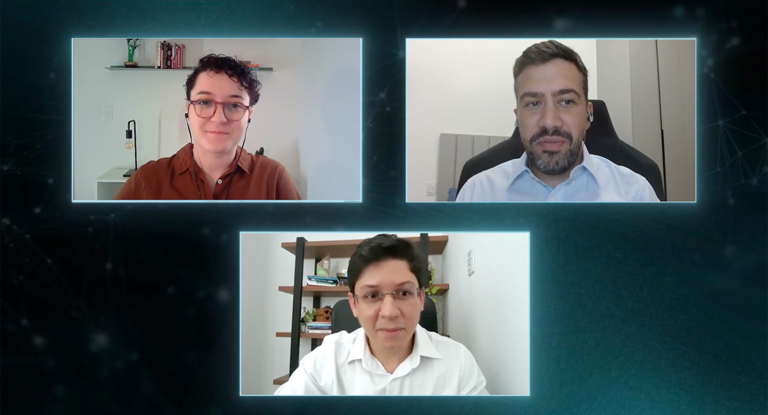
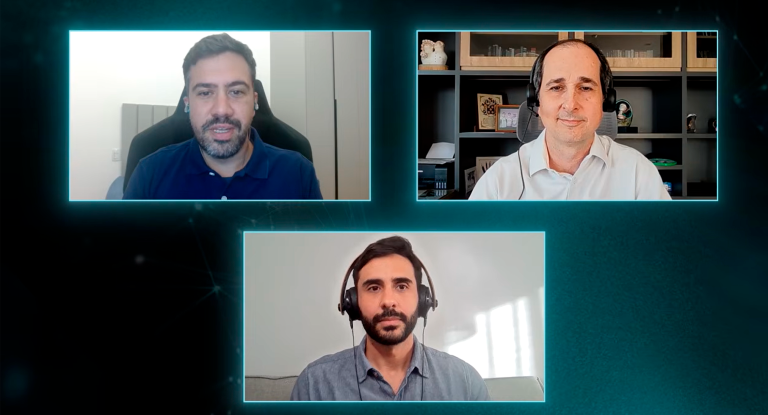
The latest episode of WayCarbon Talks explores the challenges and opportunities of climate finance in Brazil, in light of two major initiatives in the Brazilian market: Eco Invest Program and Plano Clima. Moderated by Lauro Marins, Head of Consulting and Digital Solutions at WayCarbon, the videocast features Caio Barreto and Nathalia Pereira, respectively a Consultant and Coordinator of the company’s Sustainable Finance team. Check out the key insights from this discussion below.
Is there a funding shortage?
The experts explain that whether or not there is a shortage of climate finance depends on the perspective and the type of financing being analyzed. “We can agree on the need to increase and diversify sources of private capital, particularly through foreign investment. However, when we assess the range of available instruments, our view is that perhaps the solution isn’t to create new lines of credit and mechanisms, but rather to scale up what’s already available in the market,” says Nathalia Pereira.
It is worth noting that the rationale described above pertains to decarbonization and has been applied with WayCarbon clients across various sectors, such as Industry, AFOLU (Agriculture, Forests, and Land Use), and Transportation. “In the case of adaptation, however — which requires more specific financing structures and a more local perspective — funds typically follow a longer path, starting with multilateral banks and concessional capital before reaching the project’s front lines. In such cases, new arrangements and instruments may be necessary,” the expert notes.
The flow of funds is one of the major bottlenecks in this agenda, highlighted by the challenge of linking funding at the financial level to practical project implementation. The guests analyzed this scenario using the Eco Invest Program and the Climate Plan as examples — complementary initiatives that bring together key elements to unlock climate finance in the country.
Features of Eco Invest
Eco Invest Brasil is a program coordinated by the National Treasury that seeks to attract international capital through resource leverage arrangements and Blended Finance. It operates on an auction-based model, connecting concessional funding with the leveraging of those resources by a financial institution.
It is an innovative financial structure because it addresses various bottlenecks, whether related to funding sources, foreign exchange risk, operational risk, or attractiveness to the private sector. Both public and private banks have participated in the four calls for proposals already held by the program.
However, Eco Invest arrangements tend to be more attractive for projects with relatively high investment amounts, and, furthermore, there is a high level of technical complexity involved in accessing both the auctions and the project funding. “This creates an expectation within the financial sector as well that public banks, such as BNDES and Caixa, will on-lend to subnational institutions. This would be a way to distribute part of the project budget and reach the value chain — for example, to decarbonize not only anchor companies,” notes Pereira.
Fundraising through Fundo Clima
Fundo Clima, on the other hand, operates with funds raised through Sustainable Sovereign Bonds. Linked to the Ministry of the Environment and managed by BNDES, it acts as a catalyst for financing by offering highly subsidized interest rates and extended repayment terms — conditions that are unfeasible under traditional commercial credit. As a result, the Fund becomes highly attractive for enabling companies to raise funds and invest in technologies and projects that reduce GHG emissions.
One challenge for companies seeking to raise funds through the Fund is ensuring accuracy in measuring and reporting information. “The company must report indicators and data that demonstrate the funds are being directed toward decarbonization efforts. It’s a trade-off, since the company is accessing funds at a lower cost than the market rate. This can generate an extra operating cost for companies just starting out on this agenda,” says Caio Barreto.
In short, the availability of capital is only part of the equation. As these instruments gain scale, so does the importance of structuring projects capable of demonstrating climate impact, measuring results, and meeting the reporting requirements demanded by financiers and public policies.
WayCarbon has been supporting large and medium-sized companies with these challenges for 20 years. This support ranges from data collection, emissions profiling, and the development of decarbonization and adaptation strategies to structuring sustainable financing and evaluating ESG investments.
Learn more about our solutions.
The full episode is available on YouTube (audio in Portuguese; enable automatic captions).