 EN
EN  ES
ES PT
PTPost-COP30 outlook and impacts
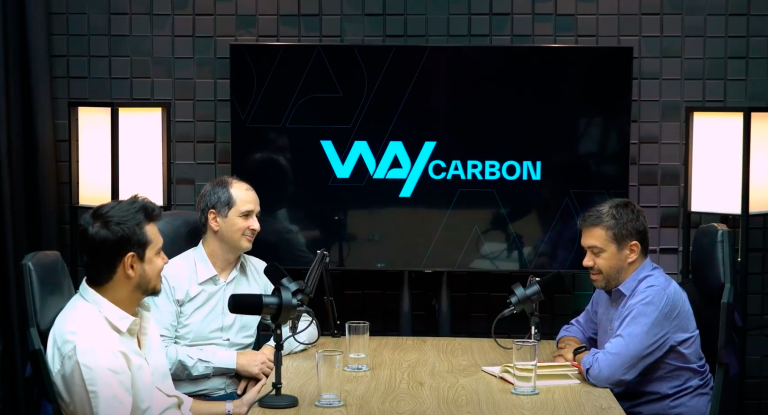
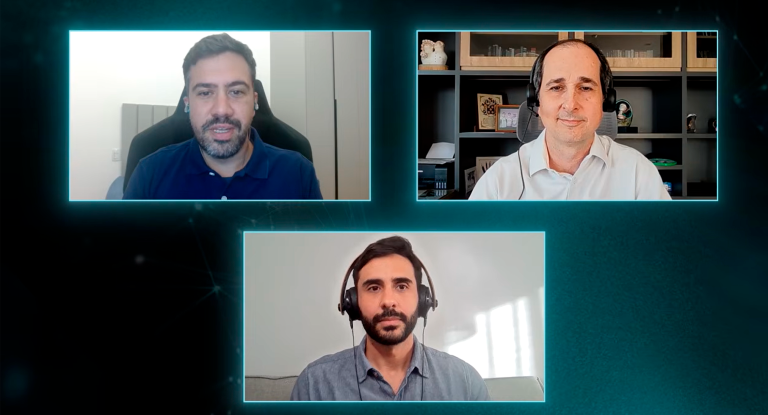
Two months after COP30, the new episode of WayCarbon Talks focuses on the main decisions and advances of the Belém Conference. The chat focused on how the decisions of the Conference should impact the private sector. For this, the mediator Lauro Marins (Head of Consulting and Digital Solutions) spoke with Felipe Bittencourt (CEO) and Keyvan Macedo (Head of Global Business), who were in Belém representing WayCarbon and followed panels and negotiations.
Felipe Bittencourt began the conversation by recalling that despite having been the first edition of a COP in Brazil, the country had already hosted two important events for the climate and environmental agenda, Rio 92, when the UNFCCC (United Nations Framework Convention on Climate Change) was created, which organizes the Conference of the Parties, and Rio+10, held in 2002. “I have participated in COPs since 2008. Of course we had some problems in Belém, but the edition left nothing to be desired in comparison with the others. Every COP has its problems,” he says.
The executive also recalled that although the result was frustrating due to the lack of mention of fossil fuels in the final text, this was not exclusive to the Brazilian edition. “It is the third COP that does not advance in this aspect and there was even a positive point with the emergence of a new event to discuss the subject, which will take place between April 28 and 29 of this year in Colombia,” said Bittencourt.
Adaptation in the spotlight
Experts agree that one of the most significant items for companies to act post-COP30 is adaptation to climate change. This is due not only to the fact that financing for adaptation has tripled in Belém, but also to the indicators created to measure the agenda. In addition, the impacts of extreme weather events around the world already affect people, companies and governments, making the urgency more tangible.
“I already realize that climate change can affect my direct operation: my asset, my factory, my distribution center. But what about when I look at the infrastructure I depend on to distribute my product and my value chain?”, asks Keyvan Macedo. “In this scenario, companies need to get out of the scope of direct action and understand: is my chain resilient or do I run the risk of my operation being stopped because a highway is flooded? The IFRS standards, which will be mandatory for publicly traded companies in Brazil from 2027, show how this agenda should be connected with the business strategy,” he says.
Bittencourt adds that, although in Europe organizations have begun to look at the chain more from the perspective of mitigation, in Brazil adaptation must go ahead, mainly due to the country’s fragility in the face of the climate crisis.
Carbon markets
Regarding carbon markets, experts say that although there were no major decisions on the subject, but rather procedural discussions, the subject had some repercussion at the event. “I see that the potential of the agenda is clear. We even launched, as part of the Conference program, the fourth edition of the study we carried out with the ICC, on Brazil’s potential in this market, focusing on the demand for carbon credits”, he says.
The executive points out that Brazil played a leading role in proposing the Open Coalition of Regulated Carbon Markets during the Belém Climate Summit (on November 7). Subsequently, the agenda was discussed at a meeting of high-level leaders during COP30. The initiative aims to create a common standard and connect different carbon credit trading systems to generate liquidity, predictability and transparency for the sector. The idea is that the Coalition uses an emissions ceiling, shared among the participants, this ceiling would decrease over time, stimulating the decarbonization of economies.
“We always have to remember that the market is a balance that has risks on one side and opportunities on the other. Therefore, those companies that have their decarbonization agendas up to date and manage to deliver a reduction greater than the permissions they have, have a bargaining chip on the table. At WayCarbon, we already see companies moving in this direction,” Macedo concluded.
Watch the full episode (Audio in Portuguese, activate automatic subtitles).