
 EN
EN  ES
ES PT
PTWayCarbon Talks discusses climate transition plans
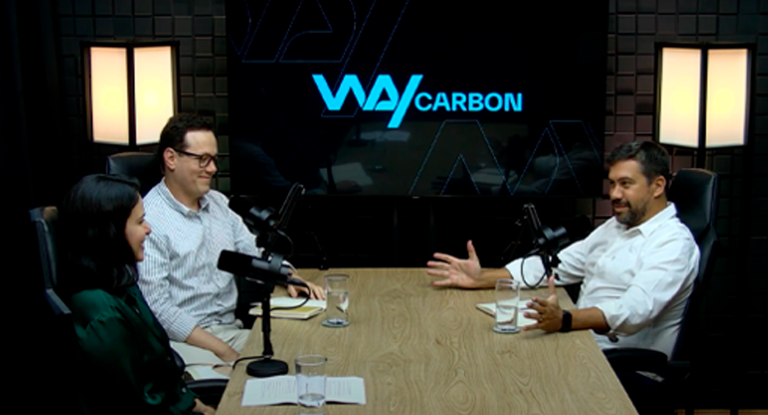
The climate transition plan is a strategic technical instrument that guides organizations in the transformations of business models necessary on the path to a Net-Zero economy. It is a structured set of actions, goals, and indicators that describes how a company intends to reduce its greenhouse gas emissions and adapt to the risks and impacts of climate change. The new episode of the WayCarbon Talks videocast addresses this complex topic, which still raises doubts and different interpretations in the market.
Mediated by Lauro Marins, Head of Digital Solutions and Consulting, the guests of the edition were Higor Turcheto, Mitigation Manager, and Melina Amoni, Climate Risk Manager, all from WayCarbon. In the chat, in addition to contextualizing the current scenario of the climate transition, the experts clarified the main doubts of clients on the topic, such as the opportunities involved in the agenda, how it integrates with corporate financial planning and how to put it into practice.
One of the main questions, according to experts, is about the difference between climate transition plans and decarbonization plans. “A transition plan is much broader. When we look at frameworks, such as the Transition Plan Taskforce (TPT), we are talking about encompassing all governance and decarbonization metrics, but including risk identification and adaptation measures. So, they are different processes, although they are interconnected”, explains Higor Turcheto.
The assessment in this case involves both the physical risks of climate change and the risks of transition. The former result from changes in the frequency and intensity of extreme weather events, such as heat waves and floods, or from long-term consequences, such as rising sea levels and a gradual change in precipitation patterns. Transition risks, on the other hand, are identified based on the impacts of the route to a low-carbon economy. Analyzed within a pre-defined time frame, they assume a variety of assumptions based on regulatory, legal, technological, market and reputational elements.
Melina Amoni points out that the heart of the matter is to have a clear strategy, which translates goals into actions and speaks to the organization’s financial agenda. “At the end of the plan, we will understand how to implement and how to finance the company’s climate strategy. To succeed in this journey, it is necessary to involve senior management and the board of directors, as well as demonstrate that the initiative goes beyond the climate issue. It involves costs, but also opportunities,” she says.
Experts reinforce that the plan is a transversal opportunity to demonstrate how decision-making within the company impacts the climate agenda and vice versa. “Our more mature clients already see the transition plan as a way of communicating their strategy to the market in a documented and complete way, generating gains in transparency, and facilitating reporting to disclosure standards such as IFRS S2 standards, which will be mandatory for publicly traded companies as of 2027,” says Turcheto.
Lauro Marins summarizes the discussion: “I believe that the climate transition plan should be considered the company’s strategic plan. This is because, depending on the conclusions obtained, it may be necessary to deeply review the operating model, change materials used in the value chain, among other significant changes, which directly impacts points such as budget and revenue generation”, he concludes.
Watch the full episode on YouTube (Audio in English, automatic subtitles must be activated).